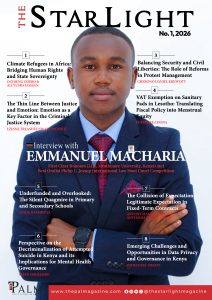
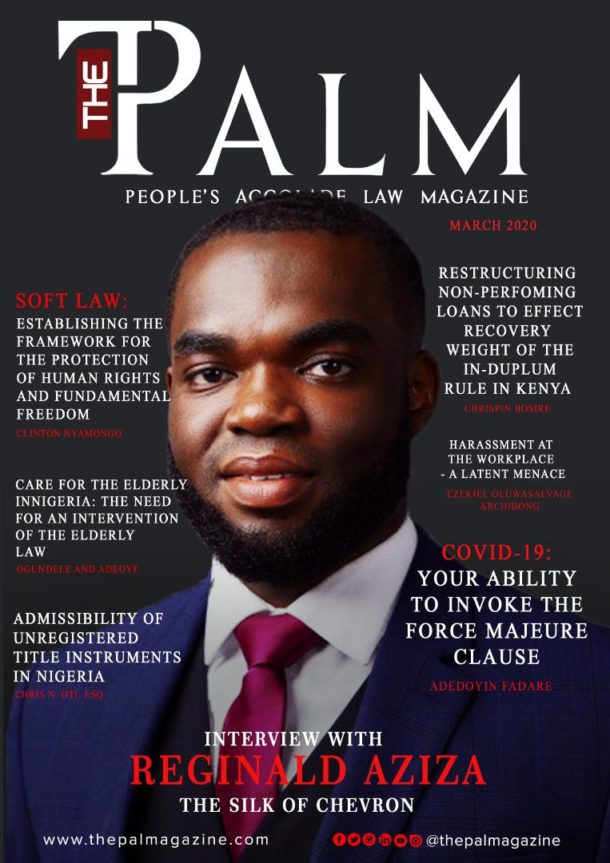
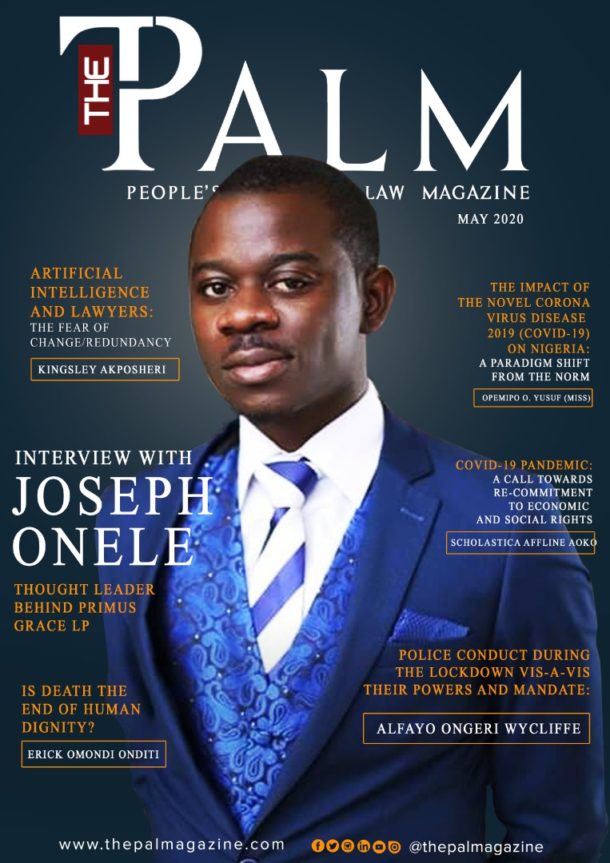
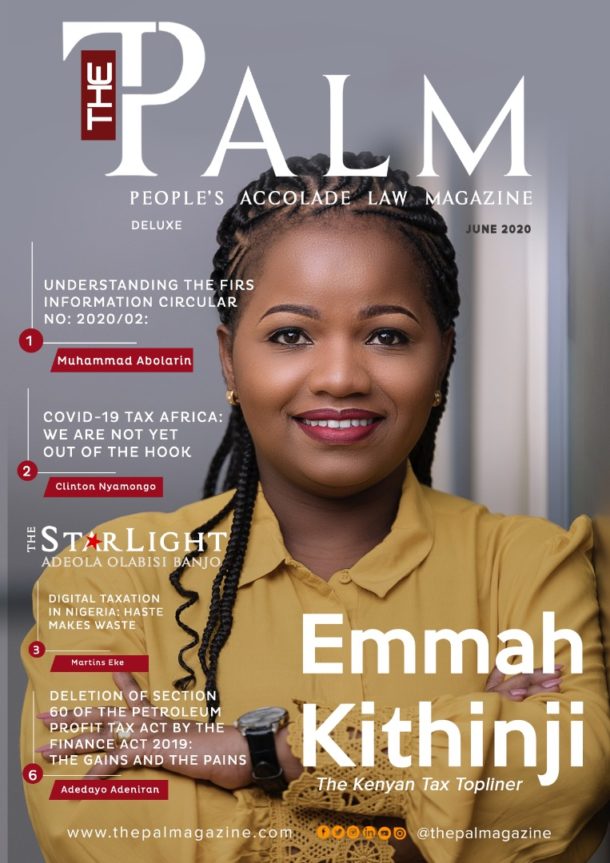
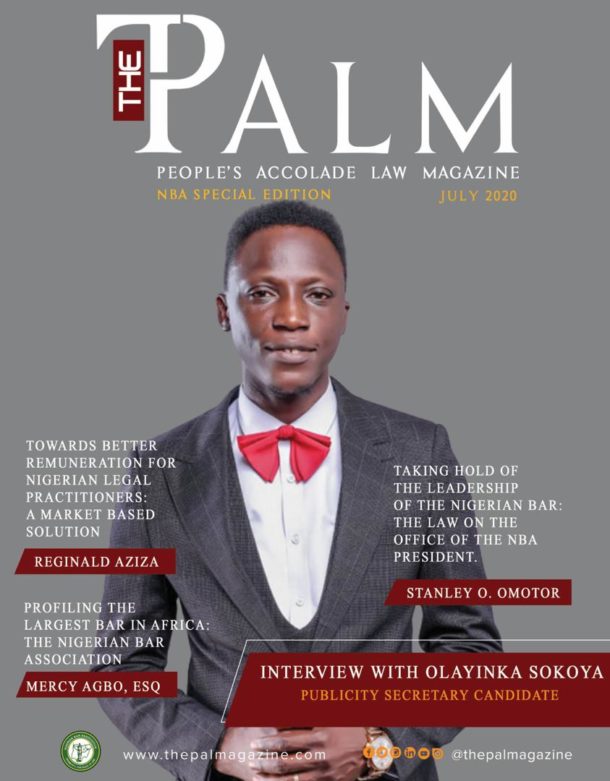
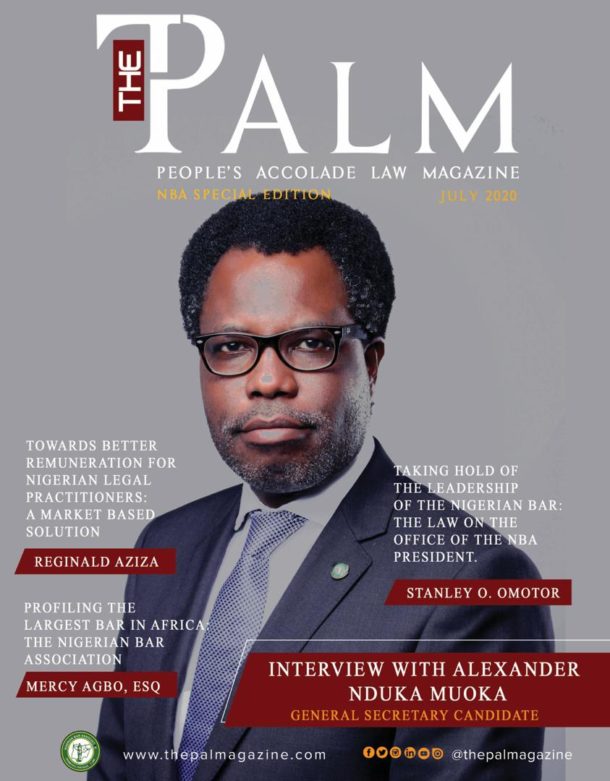
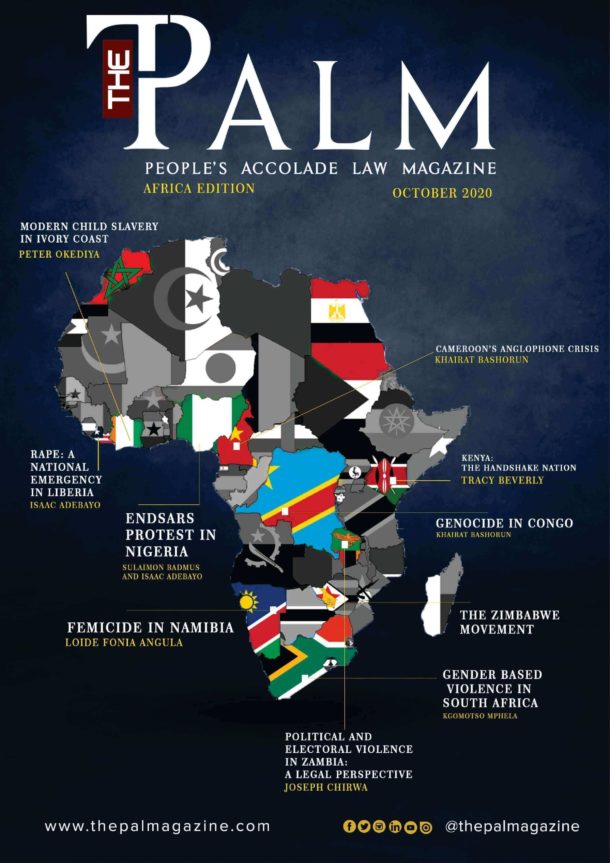
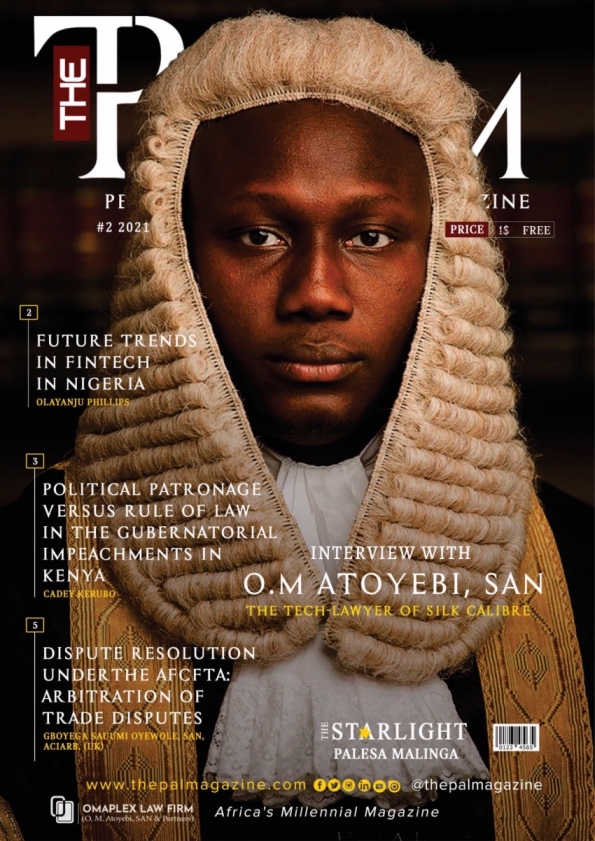
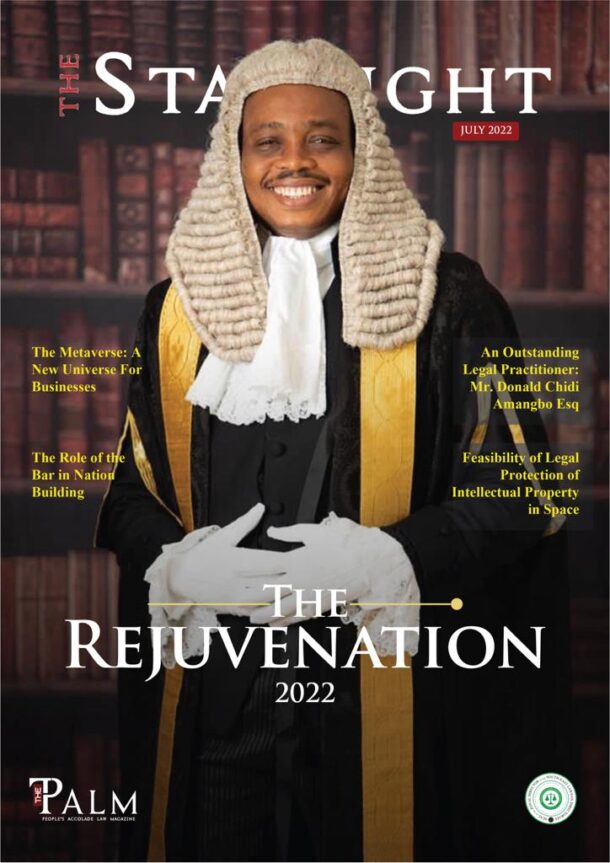
The PALM is delighted to unveil the first edition of 2026 of The StarLight Magazine, a defining publication that marks a new chapter of growth, bold engagement, and intellectual awakening, where African law students step forward not as observers, but as active shapers of the continent’s legal future.
This edition reflects an unprecedented surge in contributions, the highest since the magazine’s inception, signaling a powerful shift. Our writers are no longer content to wait on the margins; they are challenging orthodoxies, interrogating established reasoning, and charting uncommon paths in legal scholarship. In this, we find deep fulfilment as The StarLight continues to live out its vision.
From climate displacement and constitutional fragility to menstrual equity, education reform, data governance, labour relations, and mental health law, this edition confronts the law where it is most complex, and reimagines where it must evolve.
Featuring an exclusive interview with Emmanuel Macharia, a high-achieving law student whose journey from Strathmore University, Kenya to global distinction in competitions such as the Nuremberg Moot Court Competition and the Philip C. Jessup International Law Moot Court Competition reflects discipline, intellectual curiosity, and advocacy excellence.
Insightful contributions by Ochieng Odero, Ali Hassan, Ezinne Nwaru-Patrick, Cherono Kibiwott, Phindiwe Chona, Linda Nyamweya, Emmanuel Obado, Antony Makau Irungu, Anthonia Oseiwe Odion, and Steve Odhiambo offer bold, thought-provoking perspectives on some of the most pressing legal and societal issues across Africa.
Thoughtful explorations span the tension between state sovereignty and the protection of climate refugees; the delicate boundary between justice and emotion in criminal law; the erosion of civil liberties under security pressures; menstrual equity through fiscal reform in Lesotho; systemic challenges in education funding in Kenya; evolving data privacy and governance frameworks; fairness and certainty in labour law; and the shift toward a therapeutic, rights-based approach to mental health.
This first edition of 2026 is more than a publication, it is a declaration. A declaration that the next generation of African legal minds is ready, engaged, and unafraid to shape the conversations that define our time.
It is an invitation to see law not only as doctrine, but as a living instrument, one that must question, respond, and transform in service of justice and society.