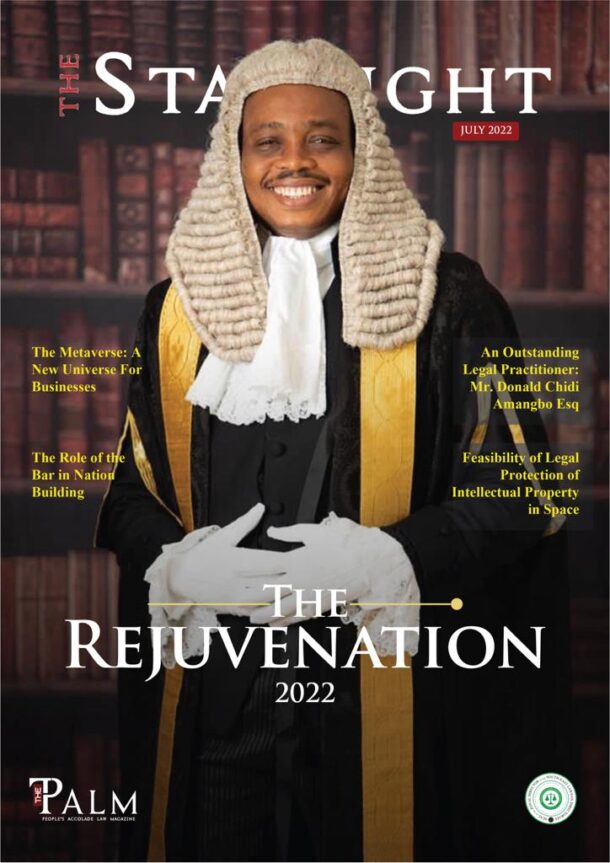
“While professional recognition and financial success have their place, meaningful careers also contribute to protecting rights, resolving disputes, strengthening institutions and improving public understanding of the law.” – Hassan Nur Isak
Hassan Nur Isak is a Somali lawyer, legal consultant and environmental law scholar. He serves as Head of Legal Affairs at Direct Aid Somalia, is the Founder and Managing Director of Samale Law Firm, and serves as Legal Director of the Justice and Development Initiative (JDI), where he contributes to rule of law, human rights and climate justice initiatives. He holds a Bachelor of Laws from Mogadishu University and a Master of Laws (LL.M.) in Environmental Law from the University of Cape Town, South Africa. His postgraduate studies were supported by prestigious scholarships, including the MINDS Scholarship for Leadership Development awarded by the Mandela Institute for Development Studies and the Faculty Scholarship in Marine and Environmental Law from the University of Cape Town. His professional experience spans legal practice, legislative review, regulatory reform, humanitarian compliance and policy development. He has contributed to Somalia’s Draft Acts review process and served as a legal expert contributor to the World Bank’s Business Ready (B-READY) initiative. He is a member of the Somali Bar Association, an advocate admitted before the Supreme Court of Somalia, and a member of the IUCN World Commission on Environmental Law. His professional interests include environmental governance, access to justice, institutional development and sustainable legal reform across Africa.
1. What Ignited Hassan’s Passion for the Legal Profession, and What Continues to Make the Practice of Law a Deeply Fulfilling Pursuit for Him?
Hassan’s passion for law grew from his understanding of what happens when the rule of law is weak. He observed that legal uncertainty does not remain confined to courtrooms or government offices. It affects families, businesses, communities and the ability of citizens to plan their futures with confidence. Strong legal systems, by contrast, can provide the stability necessary for peace, development and opportunity.
This perspective gave his legal education a clear sense of purpose. He wanted to become not only a competent practitioner, but also part of a generation capable of strengthening Somalia’s legal and institutional foundations. He envisioned a legal profession in which lawyers are recognised not simply for technical expertise, but for their role as defenders of justice, guardians of institutions and contributors to national progress.
What continues to make the profession fulfilling for him is its direct connection to people’s lives. Legal work can help an individual navigate a difficult dispute, help an institution operate with greater integrity, or contribute to a reform that improves the way a system functions. For Hassan, these practical forms of impact give the profession meaning.
His work across legal practice, advisory services, governance and policy has reinforced that conviction. Whether reviewing legal frameworks, advising organisations, contributing to regulatory processes or supporting institutional development, he sees the law as a tool that can produce tangible and lasting change. The profession also demands continual growth: legal systems evolve, new technologies emerge and challenges such as climate change increasingly require lawyers to think across traditional boundaries.
His postgraduate study in Environmental Law further broadened that perspective. It strengthened his understanding that some of the defining challenges of this century climate change, sustainable development, environmental degradation, natural resource governance and environmental justice cannot be addressed effectively without strong legal and institutional frameworks.
Ultimately, Hassan’s passion is sustained by a simple idea: justice should not be a privilege available only to those with resources or influence. It should be a lived reality that ordinary people can access and trust. For him, a legal career is therefore less a destination than a lifelong commitment to learning, service and institution-building.
2. In Hassan’s Opinion, What Qualities Define a Truly Exceptional Lawyer in Today’s World?
Hassan believes that an exceptional lawyer must possess more than technical legal knowledge. Modern legal practice requires an understanding of the society in which law operates, the ability to anticipate change and the capacity to translate legal principles into practical solutions. As law increasingly intersects with technology, economics, environmental challenges and governance, lawyers must develop perspectives beyond traditional professional boundaries.
Adaptability is particularly important in an era shaped by artificial intelligence, digital technologies, globalisation and changing regulatory environments. Although technology can improve legal research, document review and analysis, Hassan maintains that human judgment, ethical reasoning and professional responsibility remain indispensable.
Integrity is equally fundamental. No level of intelligence or professional achievement can compensate for a lack of character. Because lawyers occupy positions of trust, their conduct influences public confidence in legal institutions. Integrity matters most when professional pressures, competing interests or uncertainty make ethical decisions difficult.
Hassan also emphasises strategic thinking. Legal problems often involve wider commercial, regulatory, environmental and institutional considerations. Exceptional lawyers must therefore identify risks while helping clients and institutions develop lawful, practical and sustainable solutions.
Specialisation is another important quality. While a sound foundation in general legal principles remains essential, expertise in fields such as environmental law, taxation, commercial law, technology law, human rights and natural resource governance can enable lawyers to address increasingly complex challenges. His own interest in environmental law reflects this commitment to connecting legal expertise with climate justice, sustainable development and institutional reform.
Finally, Hassan values intellectual curiosity and empathy. Lawyers must continue learning, question assumptions and recognise the human consequences of their decisions. For him, the exceptional lawyer combines knowledge with wisdom, expertise with integrity, and professional ambition with service to society.
3. What Is the Next Groundbreaking Initiative Hassan Is Pursuing, and What Impact is he hoping It Will Make?
Hassan’s professional ambitions extend beyond courtroom practice to strengthening the rule of law, improving institutions, expanding access to justice and developing the next generation of legal and civic leaders. He believes that the future of justice in Somalia and across Africa depends significantly on capable, ethical and forward-thinking professionals.
An important part of this vision is creating opportunities for young legal practitioners to develop their skills and contribute meaningfully to society. He also advocates broader access to justice, emphasising that legal services and awareness should not be limited to those who can readily afford them. Greater legal awareness, professional support and institutional accountability can help empower communities with limited access to legal resources.
His most ambitious long-term aspiration, however, lies in environmental law. Having completed an LL.M. in Environmental Law at the University of Cape Town, Hassan recognises environmental governance as a defining legal and policy challenge. As Somalia pursues economic growth, infrastructure development and natural resource utilisation, he believes these activities must be supported by frameworks promoting accountability, responsible resource management and protection for future generations.
To advance this objective, he hopes to establish a specialised non-profit institution dedicated to environmental law and policy research in Somalia. The proposed institution would support research, public advocacy, policy engagement and environmental awareness while connecting government agencies, universities, communities, civil society and international partners. Its potential areas of focus include climate change, biodiversity protection, environmental degradation and sustainable resource management.
His membership of the IUCN World Commission on Environmental Law also reflects his commitment to environmental justice and international collaboration, particularly the inclusion of Somali perspectives in global discussions.
Hassan further hopes to pursue doctoral research and advanced scholarship. Ultimately, he measures success not merely by personal accomplishments, but by stronger institutions, improved environmental governance, expanded access to justice and lasting opportunities for future generations.

4. Which Legal Minds and Books Have Shaped Hassan’s Thoughts and Perspectives?
Hassan’s intellectual development has not been shaped by allegiance to one particular jurist or school of thought. Instead, he has been influenced by the diversity of legal reasoning itself. He believes that the law becomes stronger when different perspectives are examined, tested and debated.
A central part of his approach is intellectual independence. Two capable lawyers can examine the same legal provision and reach different conclusions, each supported by coherent reasoning. Rather than seeing disagreement as a weakness, Hassan views it as an important feature of legal development. Debate allows legal principles to evolve and respond to changing social realities.
His postgraduate education in Environmental Law exposed him to a wide range of scholarship on environmental governance, sustainable development, constitutionalism, human rights and international regulatory systems. That experience strengthened his appreciation of the relationship between law and public policy and encouraged a more interdisciplinary approach to contemporary legal problems.
He is particularly drawn to scholarship dealing with the rule of law, constitutional governance, environmental justice, international law and sustainable development. The works that interest him most are those that examine how legal institutions can help societies navigate transformation, protect vulnerable communities and create opportunities for future generations.
Judicial reasoning has also influenced his professional outlook. He respects the intellectual discipline required to interpret legal principles and balance competing interests. At the same time, he believes lawyers should engage critically with judicial and academic ideas rather than accept them passively. Legal professionals must be prepared to examine arguments, identify their strengths and weaknesses and, where appropriate, develop alternative interpretations.
For Hassan, some of the most valuable lessons also come from practice. Every client, dispute, policy review and institutional challenge reveals something that textbooks cannot fully capture. These experiences demonstrate that legal questions are ultimately connected to people, institutions and real consequences.
This combination of scholarship and experience has shaped a philosophy based on curiosity, openness and independent thought. He seeks to learn from established legal minds while developing a voice of his own. In a profession built on reason, dialogue and the search for justice, he believes the ability to listen, question and contribute new ideas is essential to meaningful legal leadership.
5. What Advice Would Hassan Offer Young Legal Professionals Trying to Find Their Place and Purpose in the Legal Terrain?
Hassan’s advice to young legal professionals begins with a commitment to continuous learning. Legal education should not be treated merely as a qualification to obtain before entering practice; it provides the foundation for professional judgment, ethical conduct and confidence. Since laws, technologies, economies and social challenges continually evolve, lawyers must remain willing to learn throughout their careers.
He encourages aspiring practitioners to seek environments that promote excellence, critical thinking and professional development. His experience across private practice, institutional legal work, civil society and policy-related initiatives has taught him that every assignment offers an opportunity to acquire knowledge and improve professional competence.
Beyond legal expertise, young lawyers should develop leadership, communication, negotiation and decision-making skills. These abilities are essential for managing uncertainty, accepting responsibility and applying legal knowledge effectively.
Hassan also emphasises patience and resilience. Professional growth rarely follows a straight path, and expectations of rapid success can lead to unnecessary discouragement. Both achievements and setbacks offer valuable lessons, provided young professionals remain committed to learning and improving.
Integrity, however, is non-negotiable. Technical knowledge may open professional doors, but character determines whether clients, colleagues and institutions continue to trust a lawyer. Honesty, consistency, professionalism and ethical conduct are therefore essential investments in a lasting career.
He further encourages young lawyers to pursue service rather than prestige alone. While professional recognition and financial success have their place, meaningful careers also contribute to protecting rights, resolving disputes, strengthening institutions and improving public understanding of the law.
Specialisation can help young professionals distinguish themselves and direct their expertise towards issues they genuinely care about. Hassan’s own interest in environmental law illustrates how a chosen field can connect professional development with pressing societal challenges.
Above all, he urges young lawyers to pursue purpose rather than prestige. Titles and recognition may change, but the impact of one’s work can endure. His message is simple: build knowledge, remain curious, protect your integrity, develop meaningful expertise and never lose sight of the people your profession is meant to serve.
Click here to read our previous millennial, Arlette Kitumaini